Humidity control that fits
Whole-home dehumidifiers for houses that never drop below 60 percent, AC airflow adjustments for borderline cases, and honest advice when your system is simply oversized. We measure first and recommend second.
Indoor Air Quality · Antioch, TN
Middle Tennessee throws humidity, pollen, and dust at your home most of the year. We install filtration, humidity control, and ventilation that actually match your house, and we will tell you which upgrades are worth it and which are not.
Mon–Fri 7AM–7PM · Sat 8AM–4PM · 24/7 Emergency
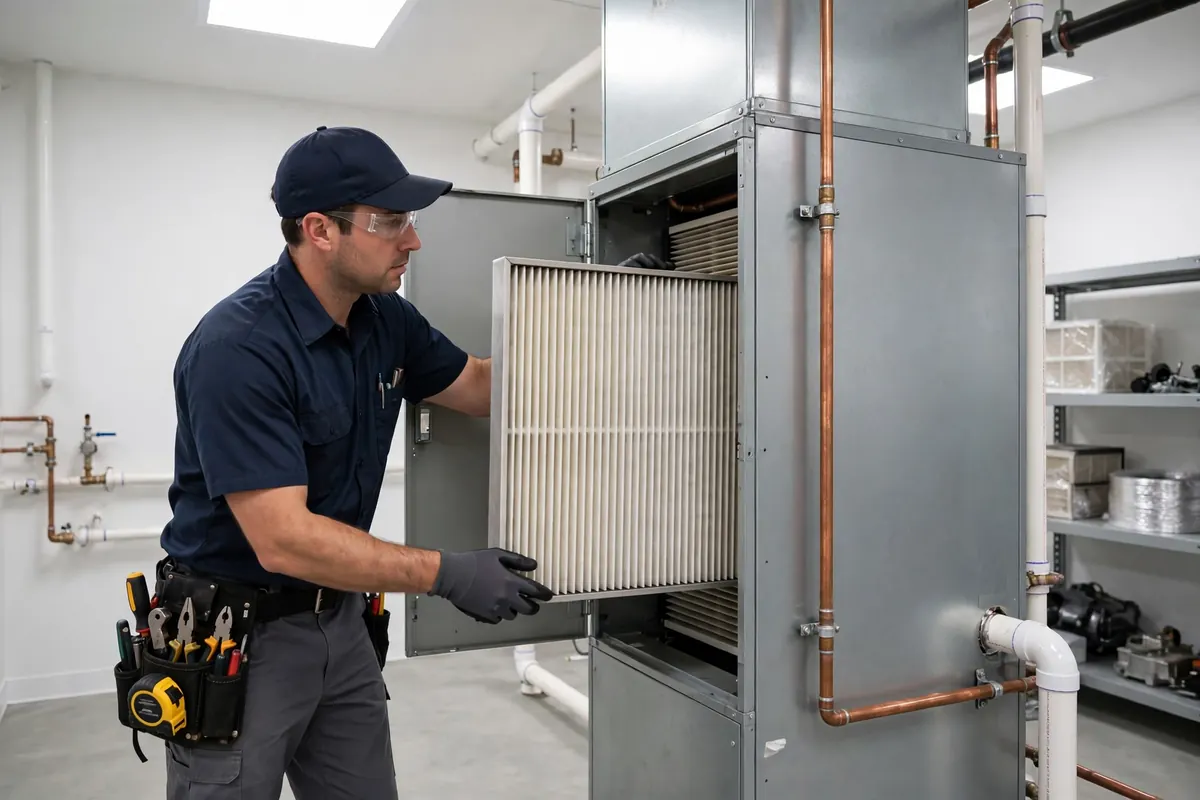
If the air in your Antioch home feels sticky in summer, dusty year-round, or triggers sneezing every spring, here is the short version: in Middle Tennessee, humidity control and better filtration solve the large majority of indoor air complaints. Fancy add-ons come later, if at all.
When we get a call about air quality, we start with two measurements, indoor relative humidity and a look at the current filter setup, because those two tell most of the story. A home sitting at 65 percent humidity in July will feel clammy no matter how clean the air is, and that moisture feeds dust mites and mold in places you cannot see, inside ductwork, behind the coil, around the air handler. Meanwhile a thin one-inch filter that has not been changed since spring is doing almost nothing for pollen and fine dust. Fix those two, and most families feel the difference within days. Our Tennessee humidity and mold guide explains the moisture side in more depth, and our step-by-step filter change guide covers the simplest upgrade you can do yourself this weekend.
Whole-home dehumidifiers for houses that never drop below 60 percent, AC airflow adjustments for borderline cases, and honest advice when your system is simply oversized. We measure first and recommend second.
A high-MERV filter in the wrong system can starve your blower and freeze your coil. We match media filters and air cleaners to what your ductwork and blower can actually handle, so cleaner air does not cost you comfort.
Bath fans that vent into the attic, a dryer dumping lint behind the wall, a crawlspace breathing moisture into the ducts. We find the sources feeding your air problems, because no purifier outruns a leak.
This is where our approach differs from the IAQ sales playbook. We will not tell you that duct cleaning cures allergies, that a UV light sterilizes your air, or that you need every product on the truck. Duct cleaning has its place, visible mold, pest debris, renovation dust, and our duct repair and sealing crew handles the duct side when it is genuinely needed. But for most Antioch homes, the winning combination is boring: right-sized humidity control, a filter setup matched to the system, and a seasonal AC tune-up that keeps the coil clean and draining properly. Add a thermostat that manages humidity setpoints, and you have covered 90 percent of what Middle Tennessee air throws at you. We would rather earn your trust with that honest list than your money with a long one.
Humidity readings, airflow checks, and a look inside the ducts. Recommendations follow evidence, not a script.
If a basic filter swap does the job, we say so. If your money is better spent sealing ducts than buying a purifier, we say that too.
The person evaluating your air quality is the same kind of tech who repairs your system, so the advice accounts for how your equipment actually works.
Not every air quality product solves every problem. This is the same matching logic we use on every IAQ visit in Davidson County.
| What you are dealing with | What usually helps most | What to skip for now |
|---|---|---|
| Sticky, clammy air in summer | Whole-home dehumidifier or AC airflow correction | Air purifiers, which do nothing for moisture |
| Dust on every surface, constant sneezing | Upgraded media filtration matched to your blower | Duct cleaning, unless inspection shows a real debris problem |
| Musty smell when the system starts | Coil cleaning, drain line service, duct inspection | Fragrance or scent systems that mask the odor |
| Stale air, headaches, high CO2 feel | Ventilation assessment and bath/kitchen exhaust fixes | More filtration, which does not add fresh air |
| Spring pollen coating everything | Tighter filtration plus keeping windows closed during peaks | UV lights, which target microbes, not pollen |
Humidity and pollen do not hit every neighborhood the same way. Lakeside air, floodplain moisture, and new-construction dust each create their own version of the problem.
Lakeside homes pick up extra ambient moisture on top of Tennessee's already humid summers. For lakeside homes near Priest Lake, dehumidification and duct moisture checks are usually step one.
Lenox Village's cottages and village homes are charming and often a little leaky, which means pollen and humidity walk right in. Lenox Village families tend to benefit most from tighter filtration paired with humidity control.
Parts of Una sit low near Mill Creek's floodplain, where crawlspace moisture feeds straight into duct systems. We check the whole path, from ground moisture to vent, before recommending anything.
The most common reason is an oversized air conditioner that cools the house so fast it shuts off before it has time to pull moisture out of the air. Middle Tennessee summers are humid enough that this shows up a lot. A right-sized system, longer run cycles, or a whole-home dehumidifier usually solves it.
They do specific jobs well. A good media filter or electronic air cleaner genuinely reduces airborne dust and pollen. UV lights help keep the indoor coil cleaner by discouraging microbial growth on it, which supports efficiency more than it cleans your air. Neither replaces source control like fixing moisture or sealing leaky ducts.
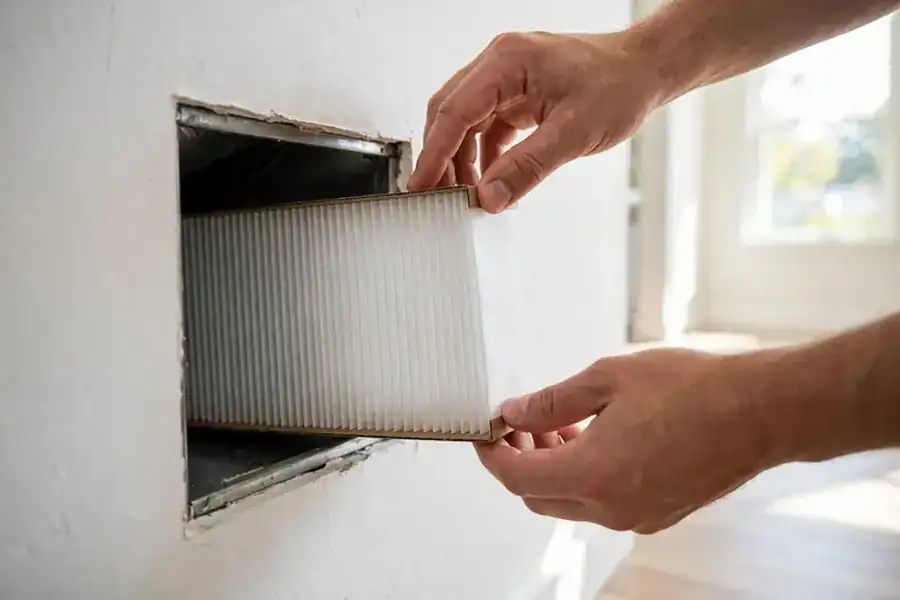
For a standard one-inch filter in an Antioch home, check it monthly and expect to change it every one to three months, more often with pets or during pollen season. Thicker media filters can go six to twelve months. Our step-by-step filter change guide walks you through sizing and swapping.
It can help in specific situations: visible mold growth inside ducts, a vermin infestation, or heavy debris from renovation work. For general allergies, though, better filtration and humidity control usually deliver more relief per dollar. We will tell you honestly which camp your home falls into rather than selling a cleaning you do not need.
The EPA recommends keeping indoor relative humidity between 30 and 50 percent. In Middle Tennessee, spring and summer push many homes well above that, which feeds dust mites and mold. If your home sits in the 60s all summer, a dehumidifier or an AC airflow adjustment is worth discussing.
It can, indirectly. Dry air feels cooler, so many homeowners find they are comfortable with the thermostat set a couple of degrees higher. The dehumidifier itself uses electricity, so net savings depend on your home and habits, but the comfort improvement is usually the bigger win.
One visit, real measurements, and a plan that fits your home and your budget. No product parade.
CALL NOW · (615) 637-1254Mon–Fri 7AM–7PM · Sat 8AM–4PM · 24/7 Emergency