Indoor Air Quality
How Tennessee Humidity Turns Your AC Into a Mold Risk
Your air conditioner is your home's best dehumidifier – until something goes wrong. Here's where mold hides in Middle Tennessee systems and how to keep it out.
Same-day appointments · Serving Antioch, TN 37013
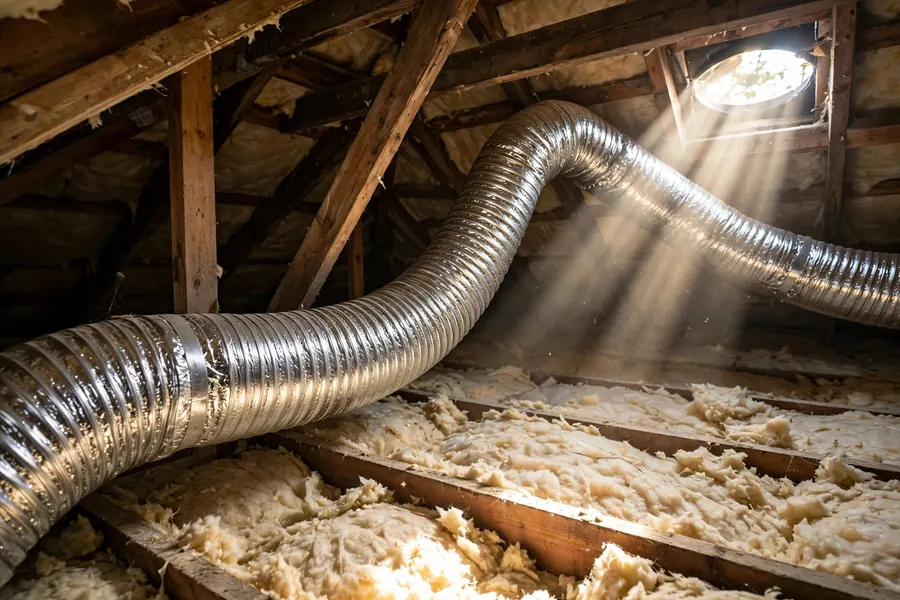
Middle Tennessee's summer air regularly holds enough moisture to feed mold anywhere it can linger – and your AC system is full of cool, damp surfaces. A properly sized, well-maintained air conditioner fights this around the clock by wringing moisture out of the air as it cools. But an oversized system that short-cycles, a dirty evaporator coil, a clogged drain pan, or leaky ducts in a hot attic can leave indoor humidity high enough for mold to take hold. Homes near Percy Priest Lake, houses with vented crawlspaces, and properties in the Mill Creek floodplain see it the most.
Why Middle Tennessee Is Mold Country
Dew points in the 70s are routine here from June through September, which means the air is nearly saturated before your AC even touches it. Add Percy Priest Lake a few miles east – lakeside homes sit in measurably damper air – plus the vented crawlspaces common under Antioch's ranch homes, and you have a region where moisture is a year-round management job, not a summer nuisance. Mold needs three things: moisture, food (dust and organic matter qualify), and time. A neglected AC system provides all three on a schedule.
How Your AC Normally Keeps Mold Away
Every time warm indoor air passes over the cold evaporator coil, moisture condenses out and drains away – a working AC can pull gallons of water out of a home on a humid day. Long, steady cooling cycles are the key: the longer the coil stays cold and wet, the more moisture gets removed. This is exactly why bigger is not better. An oversized system blasts the house cold in short bursts and shuts off before it's wrung much moisture out, leaving you with a cold, clammy house – the perfect mold incubator. Correct sizing, done with a real load calculation, is a mold-prevention measure as much as a comfort one.
Where Mold Hides in Your System
| Hiding spot | Warning signs | What helps |
|---|---|---|
| Evaporator coil | Musty smell when the system starts; weak cooling | Professional coil cleaning; typically a few hundred dollars |
| Drain pan and drain line | Standing water; musty odor; float-switch shutdowns | Drain flush and pan treatment during maintenance |
| Supply duct lining | Musty smell from specific vents; visible discoloration at registers | Duct inspection; sealing or replacing affected sections |
| Leaky attic ducts | Uneven cooling; high bills; condensation on duct exteriors | Duct sealing and proper insulation |
| Return plenum | Persistent mustiness throughout the house | Inspection and cleaning by a technician |
The Short-Cycling Problem
We see this in homes where a previous contractor installed a bigger unit "to be safe" – often a full ton oversized for the house. The system satisfies the thermostat in ten minutes, shuts off, and never runs long enough to dehumidify. Homeowners then set the thermostat lower to feel comfortable, which just burns more electricity without fixing the clamminess. If your home feels damp even though the temperature reads 72, short cycling from an oversized system is a prime suspect. The fix ranges from adjusting blower speeds and staging (sometimes possible) to right-sizing at replacement time.
What You Can Do About It
- Keep indoor humidity under 55%. A basic hygrometer tells you where you stand. Consistently above 60% is mold territory.
- Change filters on schedule. Dust on a damp coil is mold food; starve it.
- Keep the condensate drain clear. Vinegar down the drain line a few times each summer slows the algae that causes clogs and standing water.
- Don't set the fan to ON around the clock. Continuous fan re-evaporates moisture off the coil back into the house between cycles. AUTO is better for humidity control.
- Get the coil cleaned professionally if there's a musty smell at startup – this is not a bleach-and-hope job.
- Consider a whole-home dehumidifier if the AC alone can't hold humidity down, especially near the lake or over a crawlspace.
An Honest Word on Duct Cleaning and Remediation
You'll see companies selling duct cleaning as a cure-all. Here's our honest take: if your ducts are sealed, insulated, and dry, aggressive cleaning buys you little. If there's visible mold growth inside ductwork or on the coil, cleaning the HVAC components is worthwhile – but widespread mold in ducts or wall cavities is a job for a dedicated mold remediation company, not an HVAC tech with a vacuum. We're happy to handle our side – coils, drain pans, duct sealing, dehumidification – and we'll tell you straight when the problem is bigger than HVAC.
Your Questions, Answered
Does running my AC prevent mold?
A properly sized, well-maintained AC is your best defense, because it wrings moisture out of the air as it cools. But an oversized system that short-cycles, a dirty coil, or leaky ducts can leave indoor humidity high enough for mold even with the AC running constantly.
What does mold in an AC system smell like?
Musty or earthy – often described as dirty socks – and usually strongest in the first few minutes after the system kicks on. If the smell fades as it runs, the source is likely on the evaporator coil or in the drain pan rather than deep in the ducts.
Is a whole-home dehumidifier worth it in Middle Tennessee?
For many homes, yes. If your AC alone can't hold indoor humidity below 55% – common near Percy Priest Lake, in homes with crawlspaces, or with oversized systems – a dedicated dehumidifier handles moisture without overcooling the house. It's one of the most effective mold-prevention upgrades we install.
Can I clean mold off my AC coil with bleach?
No. Bleach corrodes aluminum coil fins, doesn't reliably kill mold roots on the coil's surfaces, and its fumes get distributed through your ductwork. Coil cleaning needs the right cleaners, the right technique, and a rinse that doesn't flood the drain pan – that's technician work.
Do you handle mold remediation?
We handle the HVAC side: cleaning coils and drain pans, sealing ducts, fixing the moisture problems that feed mold, and installing dehumidification. Widespread mold inside ductwork or wall cavities needs a dedicated mold remediation company – and we'll tell you honestly when that's the right call instead of selling you something that won't fix it.