We test, we do not guess
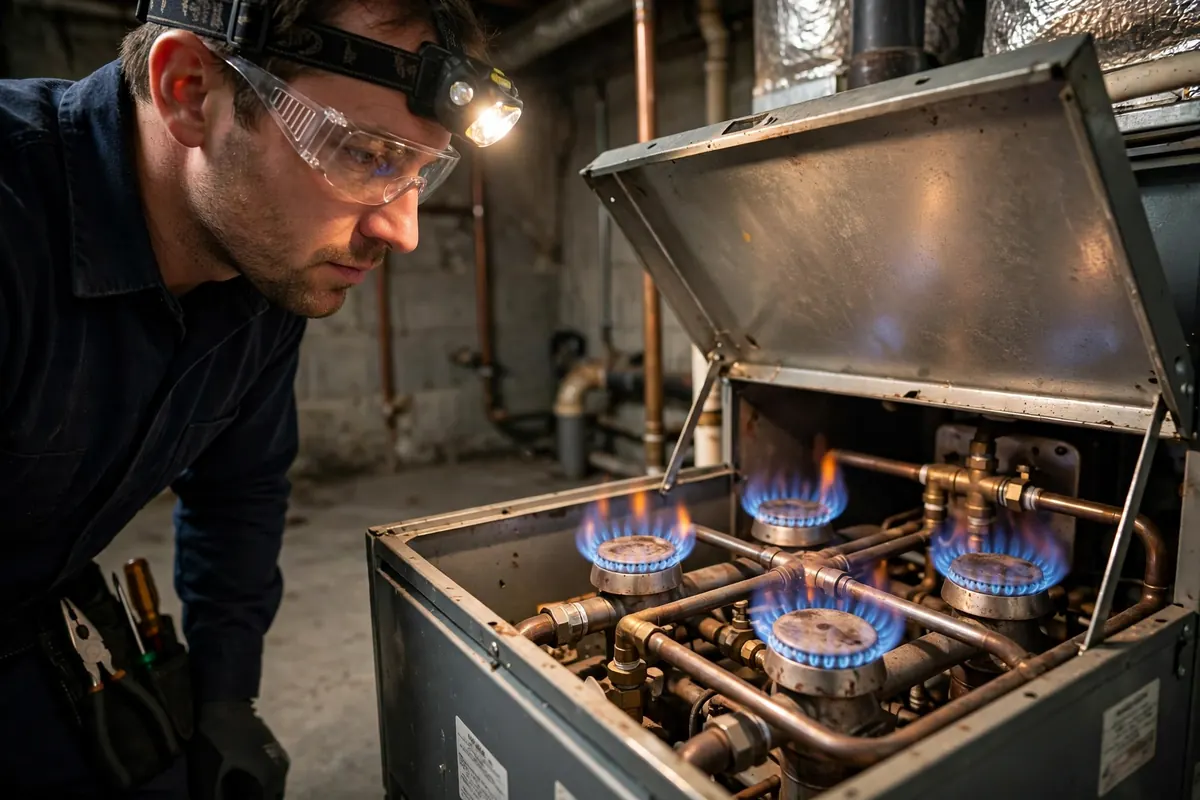
Ignition sequence, flame signal, safeties, gas pressure, and electrical draw get checked in order. When we find the failed component, you see it and hear what it does before we quote anything.
Gas Furnace Repair · Antioch, TN
Banging at startup, short cycling, cold air from the vents, or no heat at all. We repair gas furnaces across Antioch with safety-first diagnostics, and we will tell you straight when a repair beats a replacement.
Mon–Fri 7AM–7PM · Sat 8AM–4PM · 24/7 Emergency
The direct answer: most furnace trouble announces itself before it strands you. A furnace that bangs on startup, cycles every few minutes, or suddenly runs longer for less heat is asking for attention, and catching it early is almost always cheaper than waiting for a no-heat night in January.
When we get a call about a furnace in Antioch, the first thing we do is listen to the homeowner describe the sound and the pattern, because furnaces are wonderfully honest machines. A high-pitched squeal that fades as the blower warms up often means a tired blower motor bearing. Rattling that comes and goes with the blower usually traces to a loose panel or a worn belt on older units. A boom at ignition is the one we take most seriously, because delayed ignition puts stress on the heat exchanger. None of these are diagnoses over the phone, they are starting points, and a real tech still needs eyes on the unit. But they explain why we ask what we ask when you call.
One safety note that matters more than any repair tip: if you ever smell rotten eggs or sulfur near the furnace, do not try to diagnose it. Leave the house, call your gas utility from outside, and call us after the home is cleared. Gas work is not a DIY category, and it never will be.
Ignition sequence, flame signal, safeties, gas pressure, and electrical draw get checked in order. When we find the failed component, you see it and hear what it does before we quote anything.
Hot-surface ignitors, flame sensors, pressure switches, capacitors, and blower motors cause the large majority of furnace failures we see in 37013. We carry the common ones, so most repairs finish in one visit.
On furnaces past their mid-teens, we check the heat exchanger as part of the diagnosis. A crack means carbon monoxide risk, and we will tell you directly when replacement is the safe answer.
Much of Antioch's housing stock dates to the 1970s through the 1990s, which means a lot of gas furnaces around here are on their second decade or beyond. Those units are simpler than modern ones in some ways, standing pilots and basic controls on the oldest, hot-surface ignition on the slightly newer, and they are very repairable when the heat exchanger is sound. We service them regularly and keep parts for common models on hand. When the furnace is part of a larger comfort problem, uneven rooms, weak airflow, we also look at the ductwork feeding your furnace, since restricted ducts can make a healthy furnace short cycle. If your home heats with a heat pump instead, our heat pump owners' starting point covers that side, and our broader heating repair services handle everything else that makes heat.
We pull the failed ignitor, sensor, or motor and put it in your hand. You should never have to take our word for what broke.
One written price, approved by you, before a single screw turns. If we find something extra mid-repair, we stop and talk before proceeding.
We will repair a 20-year-old furnace when the math works. We will also tell you when it does not, with the numbers to back it up, instead of nursing it along with your money.
Furnace sounds are the fastest clue to what is wrong. This table covers the ones we hear about most in Davidson County homes. Treat it as a guide for what to tell us on the phone, not a final diagnosis.
| Sound or symptom | Common cause | What we do about it |
|---|---|---|
| Boom or bang at startup | Delayed ignition from dirty burners or a weak ignitor | Clean and test the ignition system; check the heat exchanger for stress |
| Rapid on-off cycling | Dirty flame sensor, clogged filter, or overheating | Test each cause in sequence; clean or replace the failed part |
| High-pitched squeal | Worn blower motor bearings | Measure motor draw; repair or replace the motor before it seizes |
| Rattling with the blower | Loose panels, worn belt, or debris in the housing | Secure, adjust, or replace the loose component |
| Runs constantly, house still cold | Undersized output, duct losses, or a failing component | Full system check including airflow and duct condition |
Gas furnaces cluster in Antioch's older neighborhoods, and that is exactly where we spend most winter days. A few areas we know well:
Hickory Hollow's 1970s and 80s ranch homes often still run their original or second-generation gas furnaces. Our Hickory Hollow neighbors get techs who know these units inside and out, including which parts are still worth stocking.
Homes near Percy Priest Lake mix gas heat with lake-effect humidity that works ductwork and filters hard. For homes near Percy Priest Lake, we check airflow and filtration alongside the furnace itself.
Una's mid-century homes have seen furnaces replaced, retrofitted, and jury-rigged over the decades. We sort out the layers and fix what is actually there, which is not always what the last guy assumed.
That is called short cycling, and the usual suspects are a clogged filter, a flame sensor coated in residue, an overheating heat exchanger from restricted airflow, or a thermostat in a bad spot. Because several different failures cause the same symptom, guessing wastes money. We test each one in order until we find it.
A bang or boom at startup often points to delayed ignition: gas builds up for a moment before the burners light, sometimes because dirty burners or a weak ignitor slowed the process. It is worth a prompt service call, since repeated delayed ignition stresses the heat exchanger.
Most gas furnaces last around 15 to 20 years with regular maintenance, though we see well-kept units in Antioch run longer and neglected ones quit earlier. Once a furnace passes 15 and starts needing major parts, we will give you the honest repair-versus-replace math instead of just selling the repair. Our repair or replace guide walks through the same thinking, and regular maintenance is the biggest lever for reaching the long end of that range.
Start with the thermostat: if the fan is set to ON instead of AUTO, the blower runs between heating cycles and pushes room-temperature air. If that is not it, possible causes include a failed ignitor, a tripped rollout switch, or a pilot issue on older units. If the fan setting checks out, call us.
Yes. A cracked heat exchanger can allow carbon monoxide into the air your family breathes, and CO is odorless. On furnaces past their mid-teens we inspect the exchanger as part of diagnosis, and if it is cracked we will tell you plainly that replacement, not repair, is the safe call.
We repair old furnaces all the time, and we keep common parts for 15 and 20-year-old units on the truck. We only recommend replacement when the repair cost, the unit's age, and its condition make replacement the better deal for you. Ask for a second opinion anytime; we welcome it.
Describe the sound, the pattern, and when it started, and we will take it from there. Fast diagnosis, flat pricing, no sales pitch.
CALL NOW · (615) 637-1254Mon–Fri 7AM–7PM · Sat 8AM–4PM · 24/7 Emergency